1
Taxiway Collision — Aircraft Wing Strike During Evening Operations
SP-1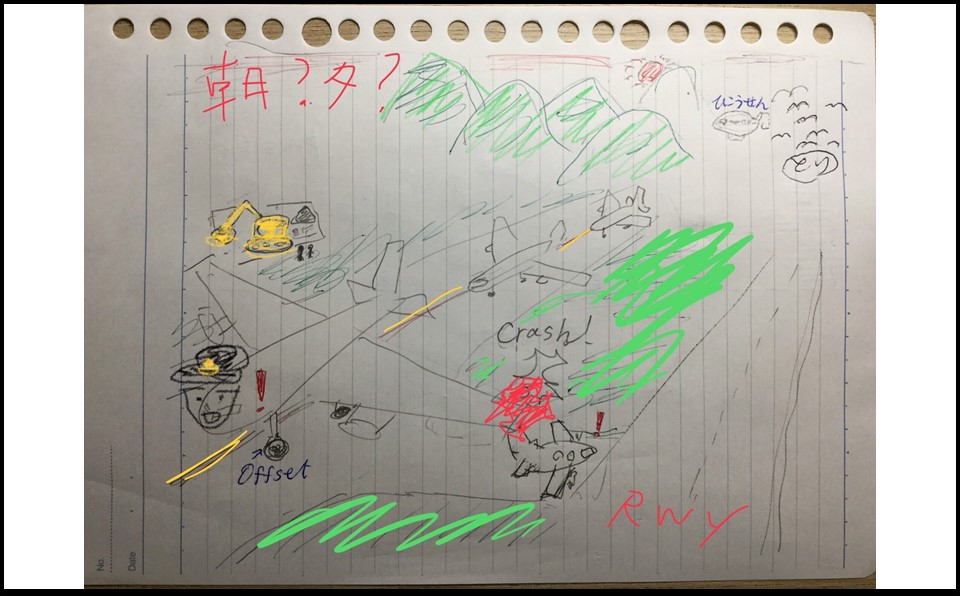
📖 Scene Description
An evening airport scene. A large aircraft has taxied off the centreline and collided with the tail of a smaller aircraft. Fire trucks and ambulances are standing by nearby. Fireworks are visible in the background sky. One aircraft is stationary at the centre of the scene. Passengers at windows of the large aircraft appear surprised.
💬 Examiner Q&A
1Would the pilot notice a wingtip collision during taxi? How would you communicate with ground personnel?
Noticing a wingtip contact during taxi is difficult as the wingtips are far from the cockpit and not directly visible. A strong vibration or thud might be felt. Communication with ground personnel would be via radio, and a wing walker or ramp crew would be called to confirm the extent of any contact.
2Of fireworks, airships, and birds — which poses the greatest threat to aircraft?
Birds generally pose the greatest operational threat due to their prevalence around airports and the risk of engine ingestion. However, fireworks present a specific hazard during evening operations, particularly to low-flying aircraft during approach and departure. Information on firework events is available in NOTAMs.
3Can a setting sun affect takeoff and landing safety?
Yes. A low sun at certain angles — particularly on east-west runways at sunrise or sunset — can cause severe glare that reduces runway visibility and makes visual reference difficult. Pilots may request a different runway or delay takeoff timing. Sun visors and appropriate approach briefings are important mitigations.
4Where can firework event information be obtained?
NOTAMs (Notice to Air Missions) are the primary source. Firework events near airports are notified in advance with details of location, altitude, and duration. Flight crews should review NOTAMs during pre-flight planning for any events that may affect their route or airspace.
Key Vocabulary
Wing strikeTaxiway centrelineNOTAMWing walkerGround collisionFirework hazard
2
Earthquake at Airport — Runway Damage, Aircraft Directed to Go-Around
SP-2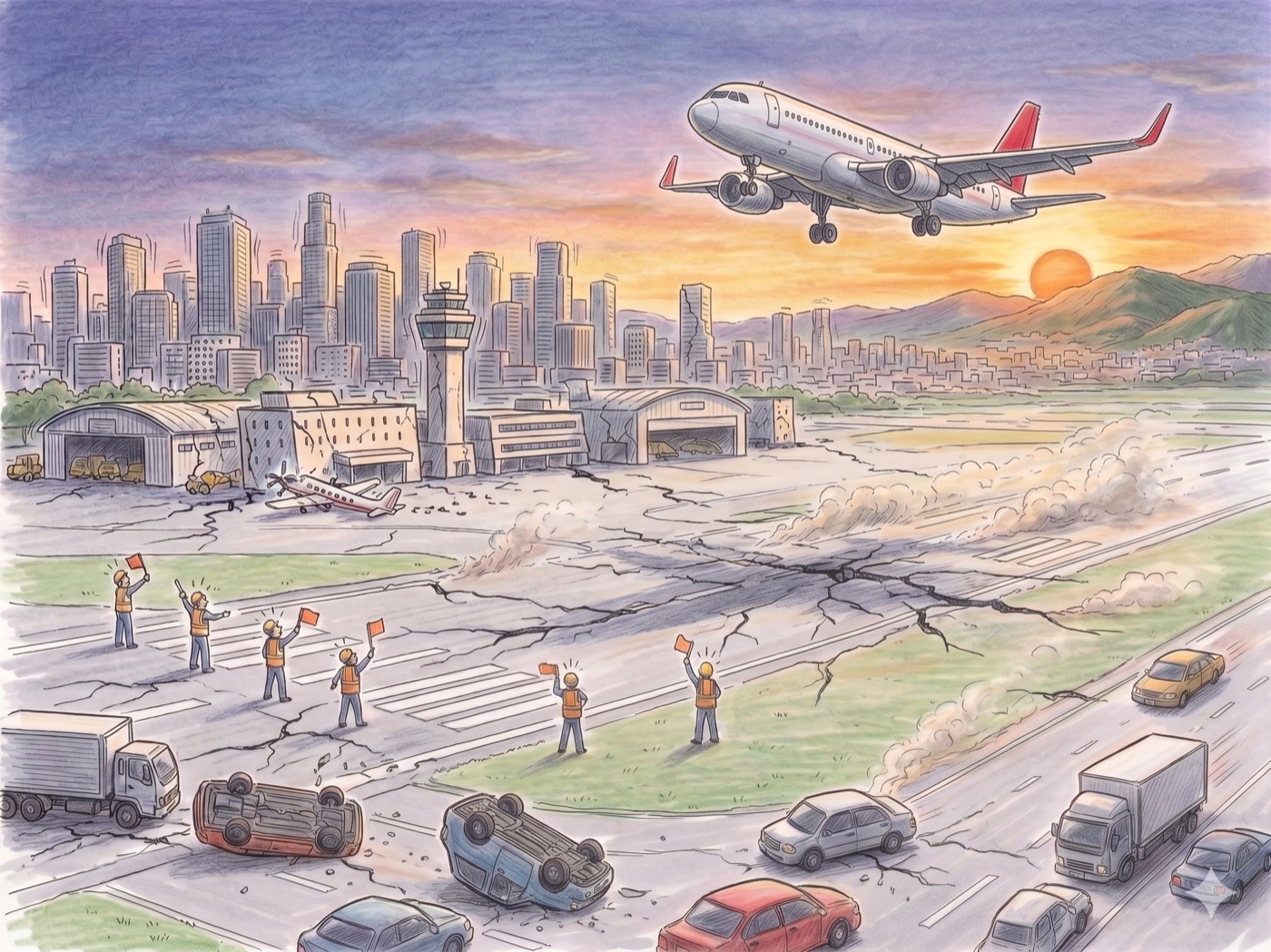
📖 Scene Description
A large airport viewed from a distance, with a city skyline in the background. Tall buildings are visibly shaking. Cars are overturned on roads nearby. The runway and ramp surfaces show visible cracks and damage. One aircraft is on approach but being waved off — told to go around due to runway damage.
💬 Examiner Q&A
1If you are the go-around aircraft, what will you do next?
I would follow the published missed approach procedure, enter a holding pattern, and request ATC updates on the situation. I would assess fuel state, identify alternate airports, and request diversion clearance if the runway at the destination cannot be quickly confirmed safe. Communication with company dispatch is also important.
2Can you land on a cracked runway?
No — we cannot land until the runway has been inspected and declared safe by airport operations. Landing on a cracked surface could cause tire bursts, directional control loss, or structural damage to the aircraft. Safety of the landing surface must be confirmed before any landing attempt.
3If the earthquake occurs at night with a power outage, what happens?
Runway lights would go dark, making visual approaches extremely difficult or impossible. ILS, VOR, and other radio navigation aids may also fail. In such a scenario, I would not attempt an approach without confirmed positive contact from the airport. Diversion to an unaffected airport becomes the priority.
4If this happened at Haneda, where would you divert?
I would consider airports outside the earthquake's affected zone — Kansai (RJBB) or Chubu (RJGG) are likely candidates for a 787, as our range easily reaches them from the Tokyo area. The final decision depends on the extent of the earthquake, fuel state, and ATC guidance.
Key Vocabulary
Runway inspectionGo-aroundAlternate airportDiversionRunway serviceabilityPower outage