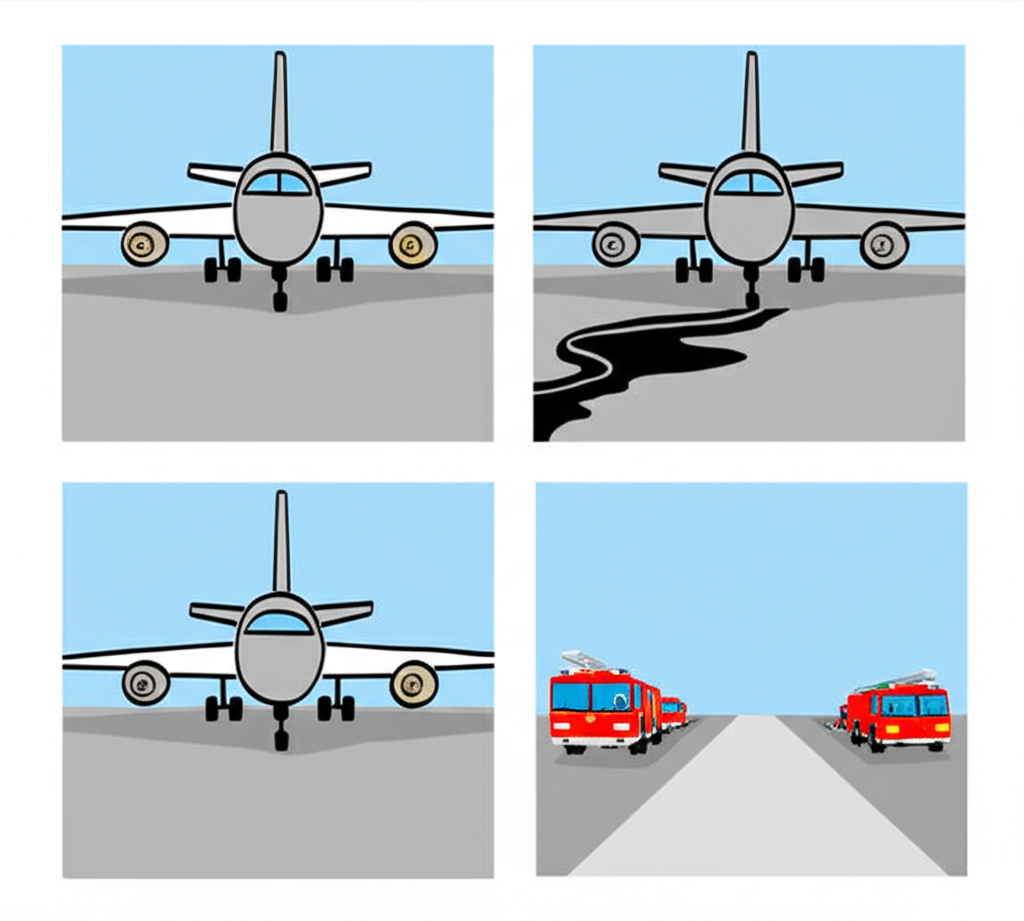
📖 Scenario
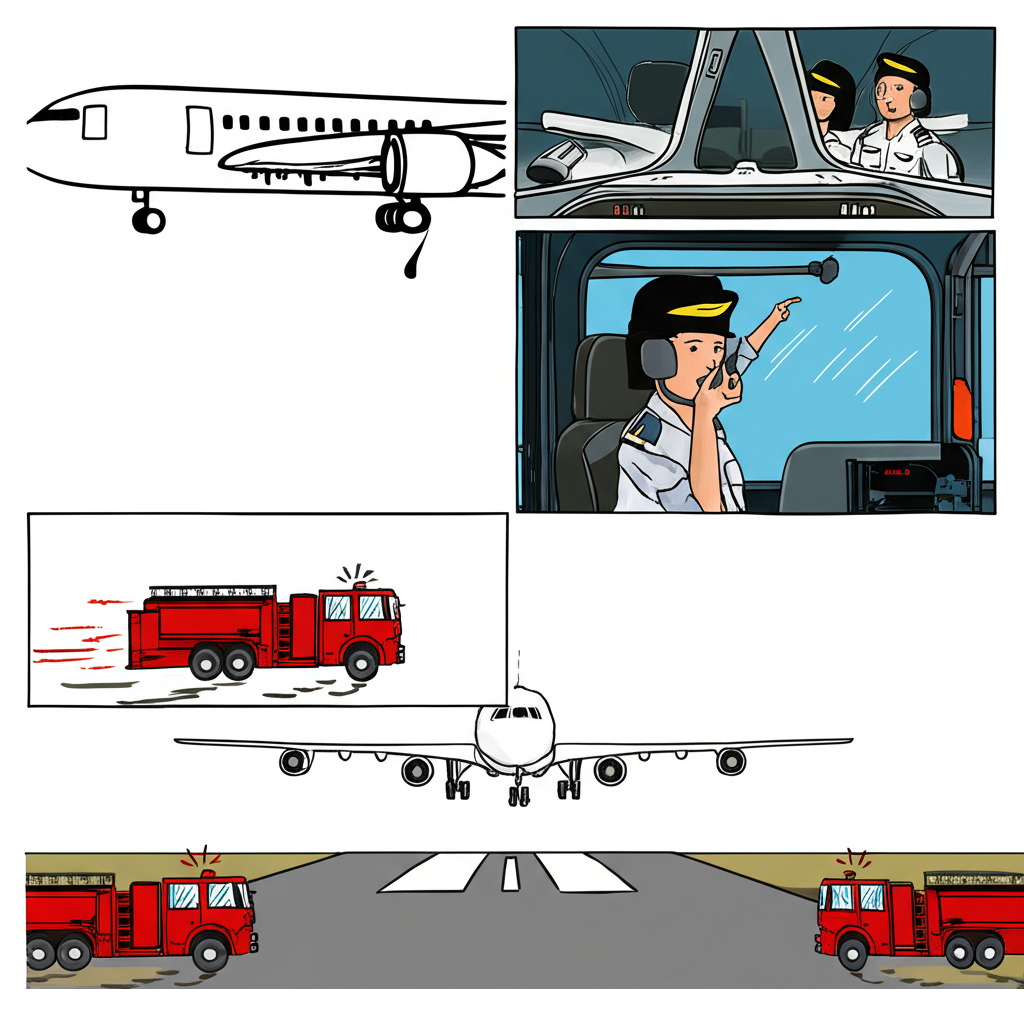
Last week, I was flying a twin-engine propeller aircraft. During takeoff, just after passing V1, a vehicle entered the runway from a taxiway. We had already passed V1, so I continued the takeoff — but the nose landing gear collided with the vehicle. After raising the gear lever, the In-Transit light remained on, indicating the gear had not retracted. I determined that continuing to the destination was unsafe and performed an air turn back.
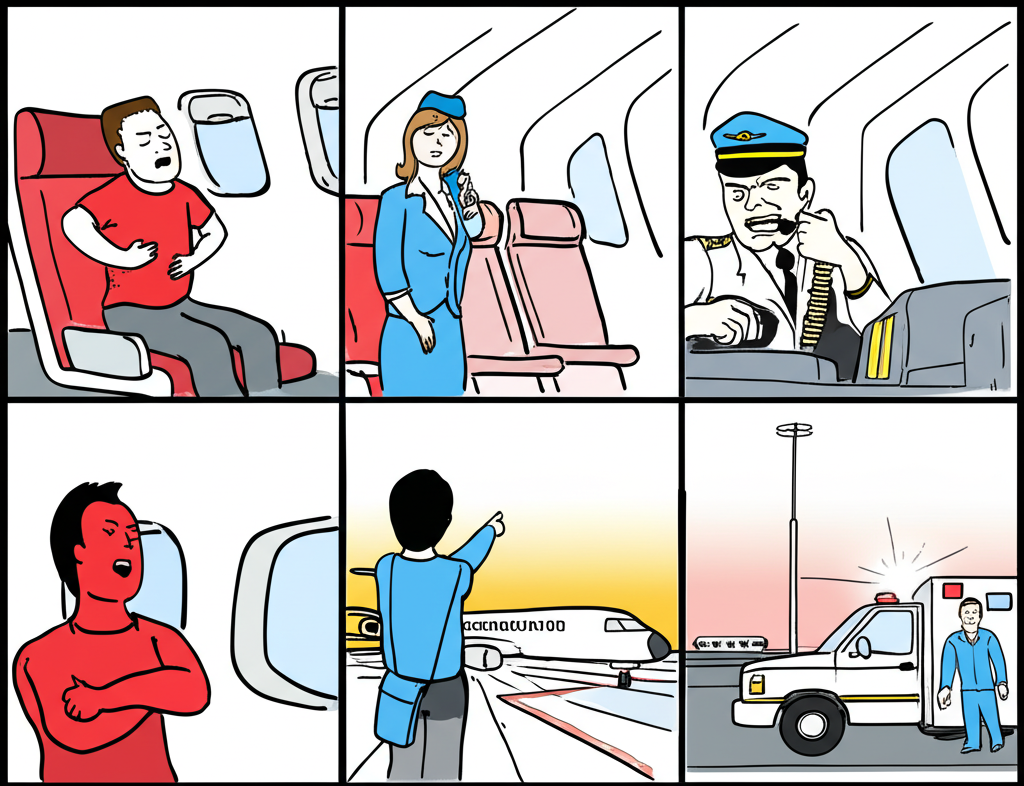
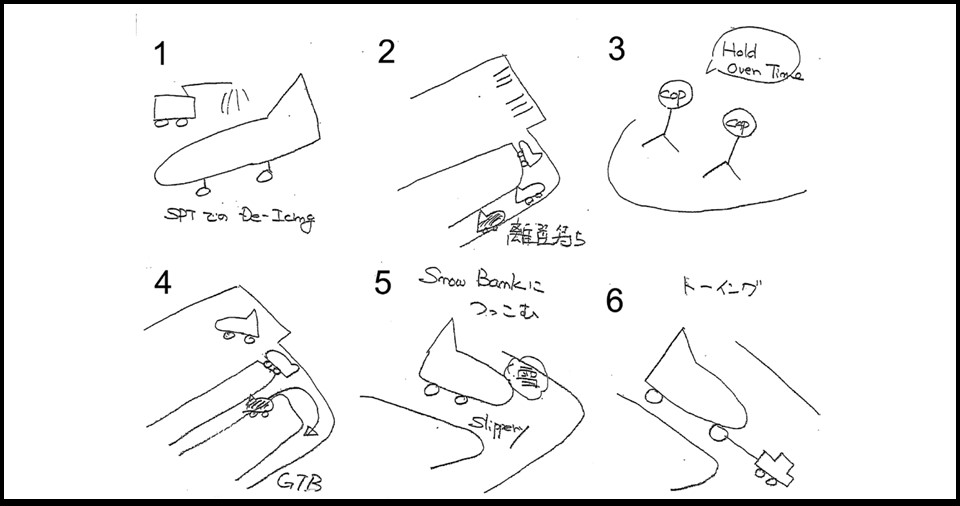
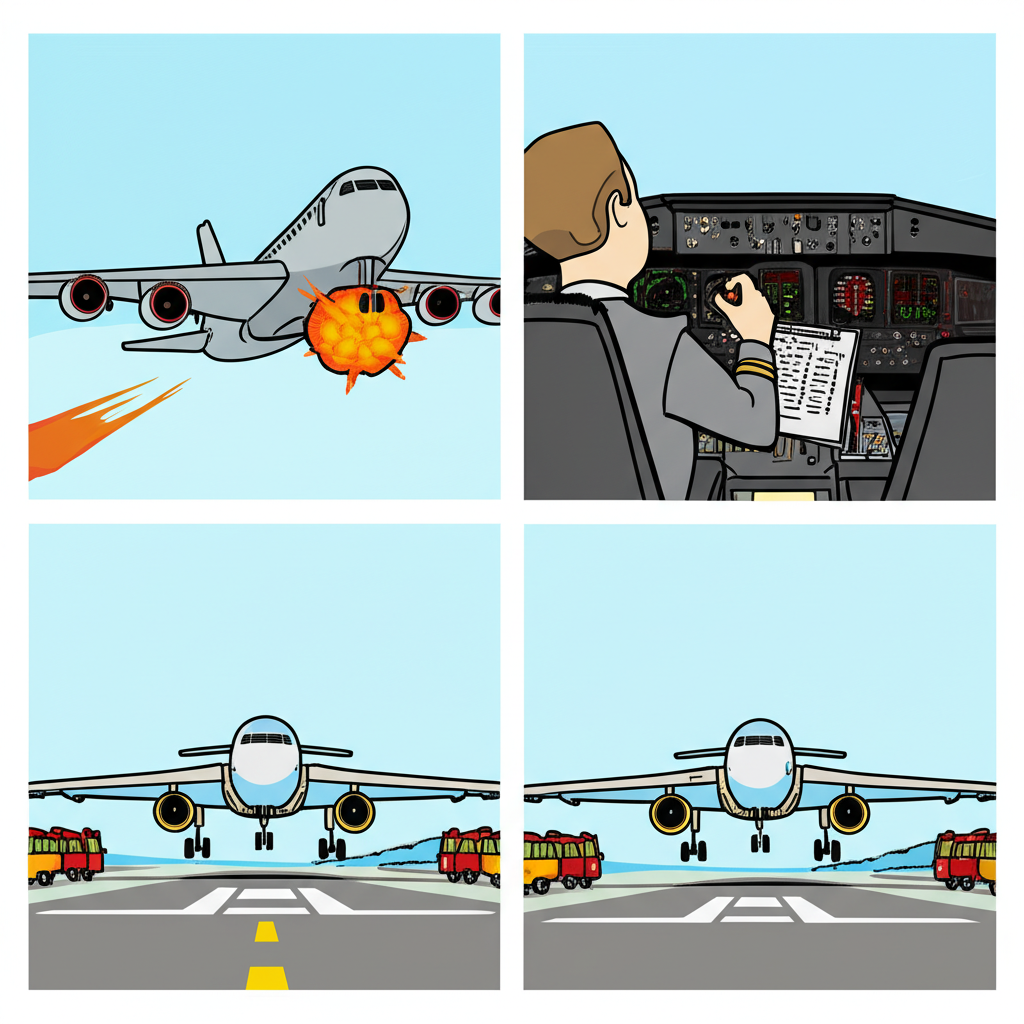
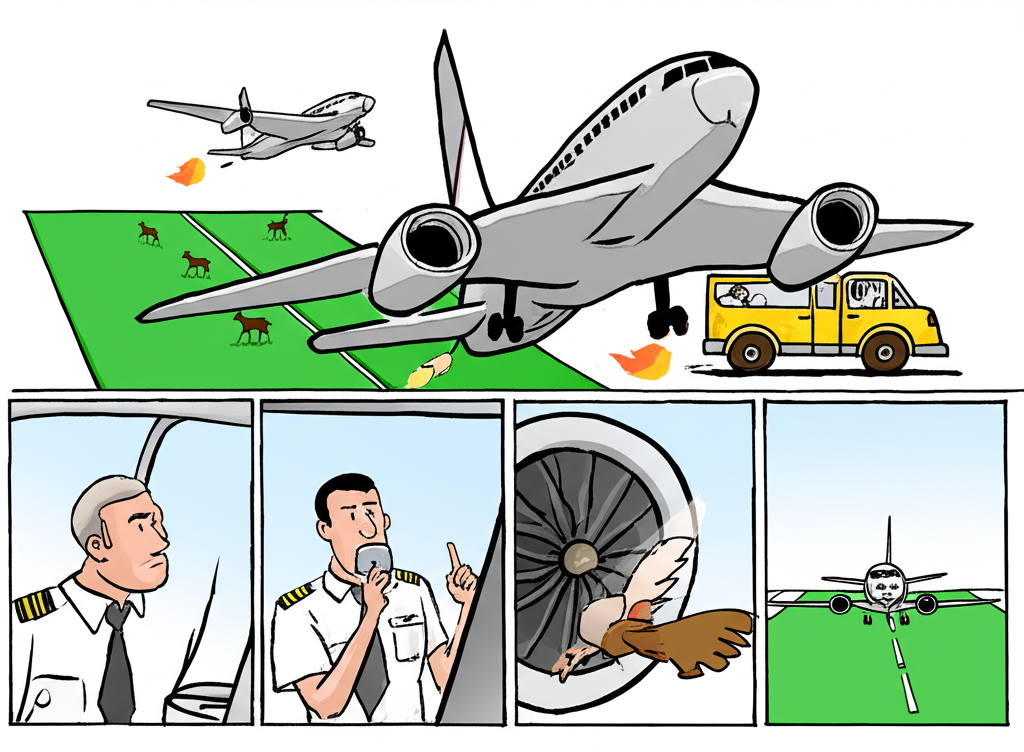
Panel 1
Aircraft accelerating on runway — V1 passed.
Panel 2
Vehicle enters runway from taxiway — nose gear collision.
Panel 3
Gear lever raised — In-Transit light remains on.
Panel 4
Crew assesses situation — gear has not retracted.
Panel 5
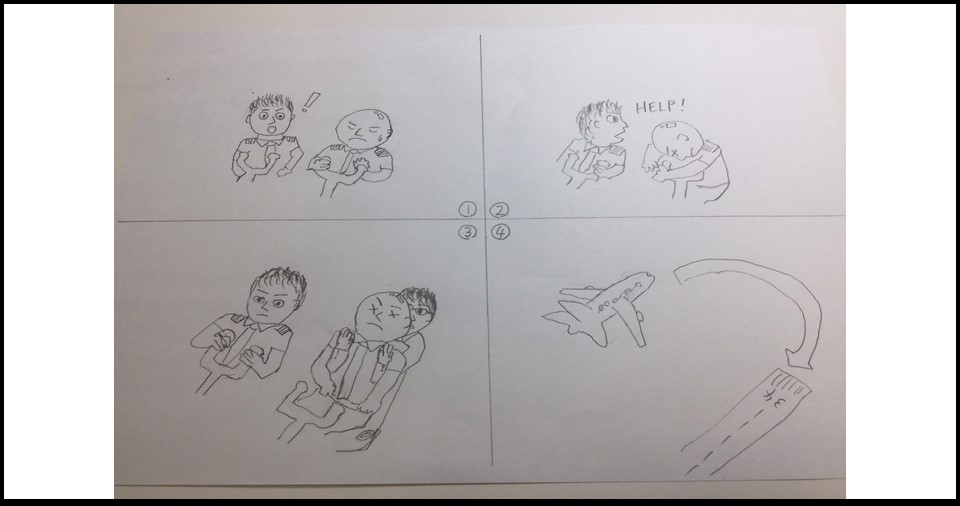
Decision to air turn back — emergency declared.
Panel 6
Aircraft returns and lands safely at departure airport.
💬 Examiner Q&A
1What is V1, and why did you continue the takeoff after the collision?
V1 is the takeoff decision speed — above this speed, the aircraft is committed to flying. Aborting above V1 at high speed carries a greater risk of runway overrun than continuing the takeoff with a known problem. The correct action is to get airborne and then assess the situation.
2Is it always necessary to return when landing gear fails to retract?
Not always, but gear-up flight significantly increases drag and fuel burn, which may make reaching the destination impractical. The crew must assess fuel state, aircraft controllability, and whether a gear-down landing is safer at the departure airport versus continuing.
3Which is more dangerous — landing without nose gear or without main gear?
Landing without the main gear is generally more dangerous because it removes the primary weight-bearing structure. The aircraft would collapse onto the fuselage, causing severe structural damage. A nose gear-up landing is more controllable, as the main gear still supports the aircraft weight during touchdown and rollout.
4Do you practise gear-failure landings in the simulator?
Yes. Simulator training includes abnormal gear scenarios such as partial extension, asymmetric gear, and gear-up landings. These sessions allow crews to practise decision-making and technique in a safe environment before encountering such events in line operations.